Address
Liguang Industrial Zone,Liguang Community, Guanlan Street, LonghuaDistrict, Shenzhen, Guangdong, China
Work Hours
Monday to Saturday: 8AM - 6PM ( Beijing Time: GMT+8 )
Sunday : Closed

Address
Liguang Industrial Zone,Liguang Community, Guanlan Street, LonghuaDistrict, Shenzhen, Guangdong, China
Work Hours
Monday to Saturday: 8AM - 6PM ( Beijing Time: GMT+8 )
Sunday : Closed

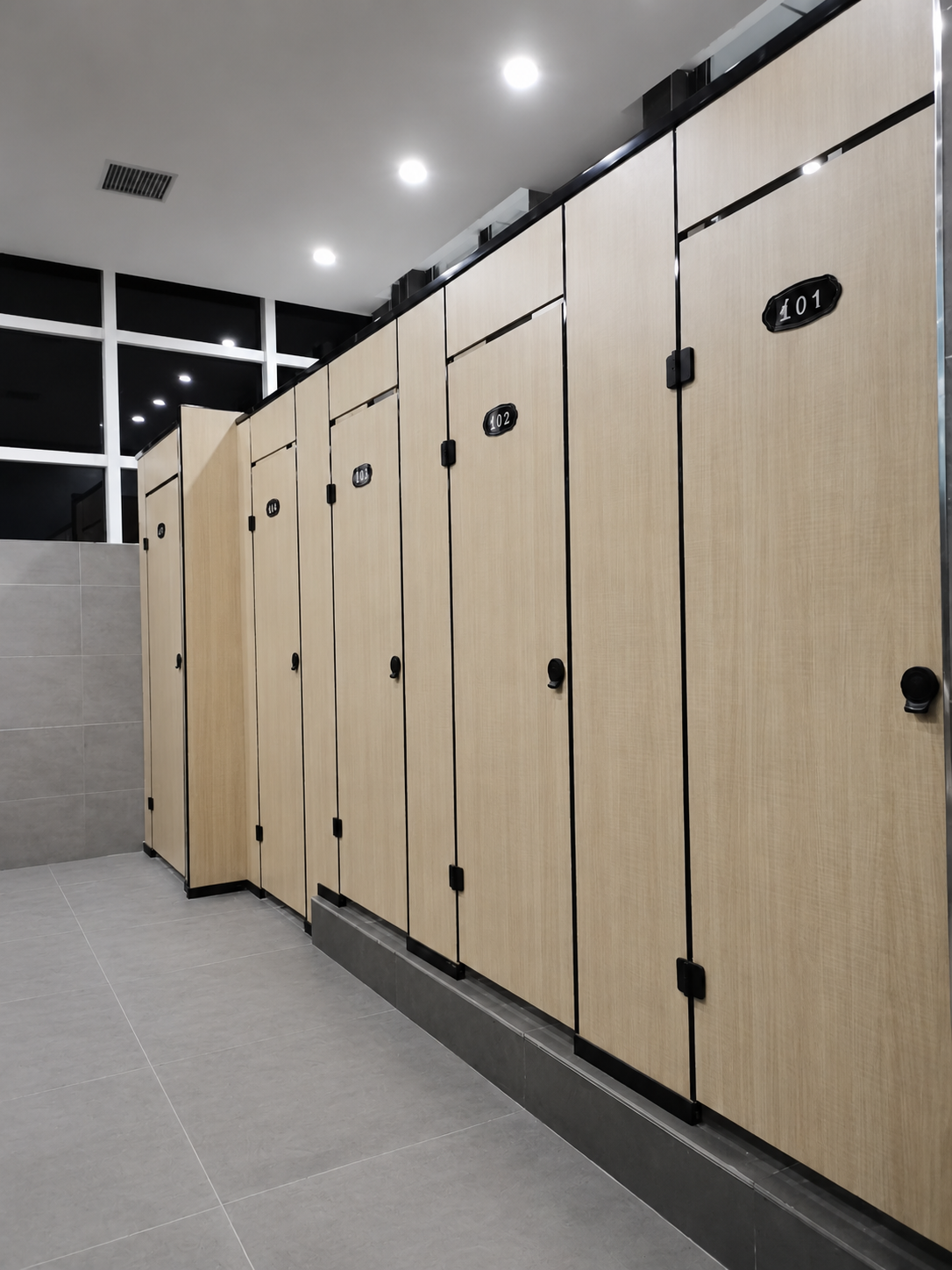
Public restrooms are undergoing a quiet yet profound transformation. They are no longer merely “necessary” functional annexes within buildings, but are gradually becoming important spaces that embody design philosophies, brand values, and public welfare. From Europe and the United States to Asia, and from airports to office buildings, the design logic of commercial restrooms is being completely rewritten.
Trend 1: Contactless and Smart Features Are the Path Forward
In the wake of the pandemic, hygiene standards for public restrooms have been completely reshaped. A global survey covering the United States, Europe, and Asia revealed that architects and interior designers are nearly unanimous in their view that the most significant changes in commercial restrooms post-pandemic include upgraded cleaning protocols, a surge in demand for contactless facilities, and a need for more spacious layouts.
Trend 2: Sustainable Materials
Environmental awareness is shifting from “conceptual advocacy” to “practical implementation.” When it comes to material selection for commercial restrooms, sustainability has become a core consideration. Among the many available materials, High-Pressure Laminate (HPL) is emerging as the material of choice for public restroom partitions due to its outstanding overall performance. It is manufactured by impregnating multiple layers of kraft paper with phenolic resin, then molding them in a single process at a temperature of approximately 150°C and under pressure exceeding 1,400 pounds per square inch to form a dense, solid-core structure.
The core advantages of this material lie in:
Waterproof and Moisture-Resistant: Resists warping, bubbling, or mold growth even with long-term use in damp areas, making it particularly suitable for bathroom environments
Fire-Resistant and Heat-Resistant: Meets high fire-resistance standards and does not release toxic or corrosive gases when burned
Abrasion-Resistant and Impact-Resistant: Features high hardness and outstanding impact resistance, making it suitable for high-traffic, high-frequency use scenarios
Antibacterial and Easy to Clean: Features a dense, smooth surface; some products include antibacterial treatment and can be wiped clean with standard cleaning agents
The value of HPL panels extends beyond their performance alone. The industry is shifting from a focus on “material selection” to “full lifecycle management”—some manufacturers have already developed integrated capabilities spanning production, processing, installation, and maintenance, using standardized construction nodes and modular design to extend the panels’ lifespan and reduce total cost of ownership. This reflects a deeper trend: the operational logic of commercial restrooms is shifting from “buying cheap materials” to “creating value throughout the entire lifecycle.”
Trend 3:
From “One-Size-Fits-All” to “Spatial Experience”
If the goal of bathroom design in the past was to ensure the space was “clean, dry, and odor-free,” by 2026, that goal has evolved into “creating a comfortable spatial experience that fosters a sense of belonging.”
In terms of aesthetic style, minimalism has become the mainstream. The choice of materials itself has become part of the design language. In high-end commercial spaces, anti-bacterial panels with marble effects and wood grain finishes are highly favored, as they meet durability requirements while fulfilling design intentions. Designers are using these materials to transform restrooms from “functional corners” into “brand touchpoints.”
Trend 4:
Inclusive Design and User Dignity
In commercial restrooms of 2026, inclusivity and privacy are design priorities. The traditional “men’s and women’s” dichotomy is being replaced by more flexible layouts—new construction and renovation projects are increasingly adopting gender-neutral stalls (typically standalone cubicles) to support inclusivity, and family restrooms are also becoming more common.
From “Functional Corner” to “Brand Calling Card”
A special report on the European cleaning industry points out that public restrooms are being redefined as key spaces closely linked to customer experience, brand image, and public welfare—and, to a certain extent, serve as a symbol of a city’s modernity. For commercial spaces, restrooms may be the “last point of contact” between customers and the brand—and the impression they leave is often just as profound as that of the first point of contact. Dirty, dilapidated, and poorly maintained restrooms send the message that “this company does not pay attention to details”; conversely, thoughtfully designed, clean, comfortable, and well-equipped restrooms silently declare, “We value the experience of every user.”
Commercial restroom design in 2026 has moved beyond the basic function of “meeting toilet needs” and entered a new phase that integrates health, technology, aesthetics, and inclusivity. Contactless facilities ensure hygiene and safety, sustainable materials address environmental responsibility, thoughtful design enhances the user experience, and inclusive layouts demonstrate a commitment to human-centered care.
From high-performance Antibacterial Board partitions to integrated systems behind mirrors, and from soft earth tones to flexible layouts—these trends all point in one direction: restrooms are becoming an indispensable “mark of quality” in public spaces. They are gradually evolving into spaces worthy of careful attention and management.
