Address
Liguang Industrial Zone,Liguang Community, Guanlan Street, LonghuaDistrict, Shenzhen, Guangdong, China
Work Hours
Monday to Saturday: 8AM - 6PM ( Beijing Time: GMT+8 )
Sunday : Closed

Address
Liguang Industrial Zone,Liguang Community, Guanlan Street, LonghuaDistrict, Shenzhen, Guangdong, China
Work Hours
Monday to Saturday: 8AM - 6PM ( Beijing Time: GMT+8 )
Sunday : Closed

Upgrade your storage solutions with our premium HPL Lockers – the perfect blend of durability, style, and functionality. Designed for modern spaces, these lockers are crafted with High-Pressure Laminate (HPL), ensuring exceptional resistance to scratches, moisture, and wear. Whether for schools, gyms, offices, or industrial facilities, HPL Lockers offer a sleek, professional look while standing up to heavy daily use.
Showing all 15 results


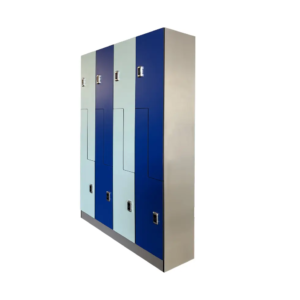


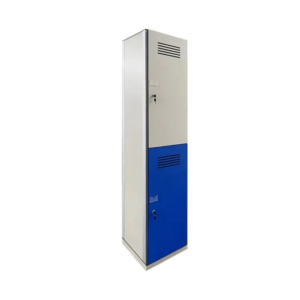
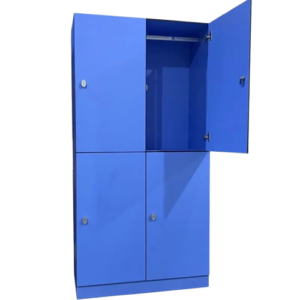
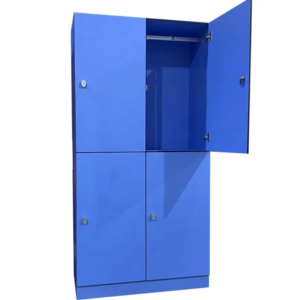


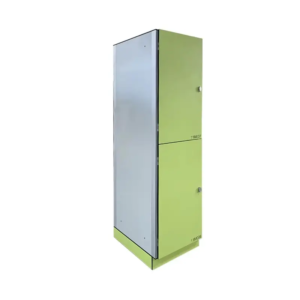
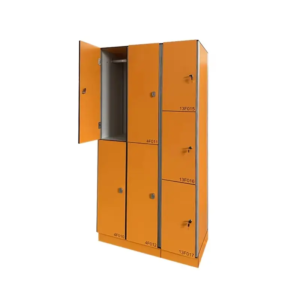
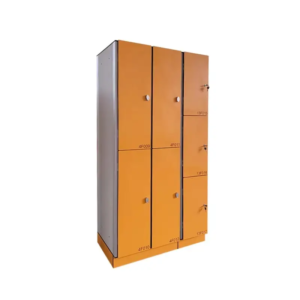

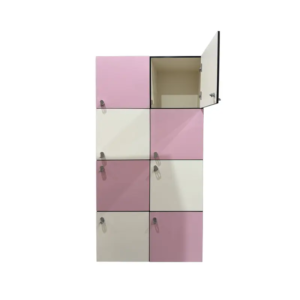
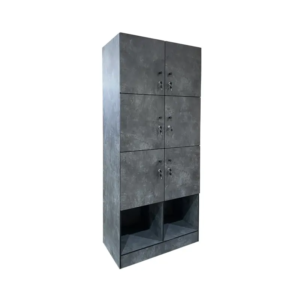
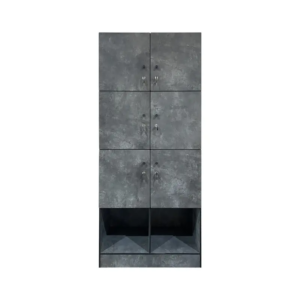
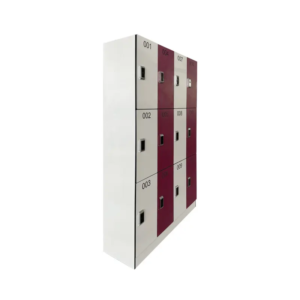
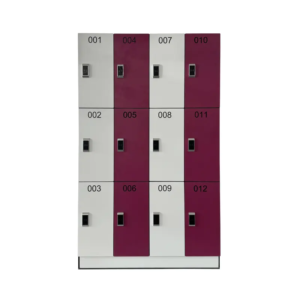
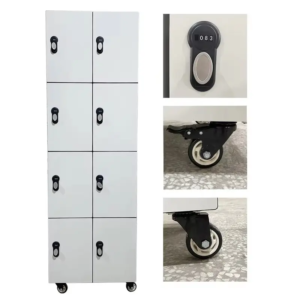

High-pressure laminate lockers have become the go-to choice for facility managers, designers, and fabricators across commercial and industrial environments. From hospitals and food processing plants to corporate offices and leisure centers, HPL lockers consistently outperform alternatives on durability, hygiene, and long-term value. This guide covers everything needed to specify, plan, and maintain HPL lockers for demanding real-world environments.
Budget locker decisions often look attractive on paper but reveal their true cost within the first few years. In high-traffic environments where lockers are opened and closed hundreds of times daily, inferior materials degrade quickly, creating operational and financial consequences that far outweigh initial savings.
When locker doors warp, edges delaminate, or locking mechanisms fail, the problems go beyond aesthetics. A cracked surface that cannot be properly sanitized introduces contamination risk in healthcare and food processing settings. Failing components pull maintenance staff away from higher-value tasks. For designers and fabricators specifying lockers for managed environments, understanding how panel thickness, substrate quality, and edge treatment affect real-world durability is essential.
Employee satisfaction surveys across manufacturing and healthcare facilities consistently identify locker room conditions as a significant factor in overall workplace satisfaction. In visitor-facing environments, guests notice the textures, woodgrain finishes, and overall presentation of locker installations just as they notice flooring and lighting. Facilities that invest in quality HPL lockers consistently score higher on visitor satisfaction metrics.
High-pressure laminate is produced by bonding several layers of kraft paper and décor papers under extreme heat and pressure, creating rigid sheets that are fundamentally denser and more durable than surface-applied laminates or powder-coated steel panels.
At the heart of every HPL panel is a core saturated with phenolic resin. This impregnation gives HPL its exceptional density and structural integrity. Unlike TFL or standard laminate alternatives, where a decorative layer is bonded to a composite wood substrate, HPL is a homogeneous sheet where resins and paper layers are fused into a single dense material.
The visual layer begins with a décor paper printed using rotogravure or inkjet processes, carrying the color, pattern, or woodgrain finish that defines the locker’s appearance. Above it sits a protective wear layer that shields the surface from abrasion, UV exposure, and chemical contact. This UV stability means lockers installed under harsh artificial lighting or partial sun exposure maintain their color integrity over time.
The chemical resistance of HPL makes it the material of choice for food processing, medical, and laboratory settings where aggressive cleaning protocols are routine. Unlike plastic laminate alternatives that can blister under repeated chemical exposure, HPL surfaces maintain their integrity across thousands of cleaning cycles.
When the total cost of ownership is calculated across 15 to 20 years, HPL lockers consistently demonstrate a significant advantage over powder-coated steel and standard laminate alternatives. Plastic laminate bonded to composite wood cores using contact adhesives can delaminate at edges over time, particularly in humid environments. HPL, by contrast, is a self-supporting rigid sheet that does not rely on surface bonding for its structural integrity.
Finding the right HPL locker configuration depends on the facility, the user profile, and the available floor plan. HPL lockers are trusted across a wide range of commercial and institutional settings worldwide.
Gym Lockers – Built for fitness environments with moisture-resistant HPL surfaces, ventilation components, and robust locking systems suited for high-turnover member use.
School Lockers – Combining impact-resistant HPL panels with anti-graffiti surface treatments and durable edge banding that holds up through years of student use.
Healthcare Lockers – Specified with anti-microbial HPL surface treatments, sealed edges, and chemical-resistant panels supporting rigorous sanitization protocols.
Hospitality Lockers – Available with custom RAL color matching, woodgrain finishes, and logo integration options that turn a functional locker into a branded touchpoint.
Office Lockers – Tailored for modern workplaces with design variety, compact configurations, and smart access control technology.
Industrial Lockers – Engineered with heavy-duty HPL panels and reinforced components for manufacturing and logistics facilities.
Spa Lockers – Designed for wet-area compliance with drain-compatible base plinths and humidity-resistant HPL surfaces.
Stadium Lockers – Built for large-scale, high-occupancy installations where durability and clean design are non-negotiable.
Transportation Lockers – Configured for transit hubs with coin-return or electronic access systems and vandal-resistant HPL surfaces.
Effective space planning is as important as material selection. Poor layout decisions create congestion, compromise egress compliance, and underutilize available floor area.
HPL locker banks are most effectively planned as modular runs aligned with structural walls. This simplifies installation, ensures a clean finished design, and allows drainage points to be positioned beneath locker bases without awkward gaps. Modular planning also simplifies future expansion when a facility grows its workforce or membership base.
The choice between tiered and single-tier HPL lockers depends on how long users spend at the locker and what they need to store. Single-tier full-height lockers suit environments where users change fully and store large bags. Tiered configurations maximize individual locker units within a given floor area, working well in offices, schools, and transit hubs.
Capacity planning goes beyond simple headcounts. Manufacturing and healthcare facilities face unique challenges where locker rooms must accommodate outgoing and incoming shift workers simultaneously. A proper shift-change overlap analysis calculates the maximum simultaneous population and should inform both the total number of locker units and the room layout.
Access control is one of the most consequential decisions in any HPL locker specification. Coin-return and token-operated locks remain reliable and cost-effective for public-facing installations in leisure centers and transit hubs, requiring no power infrastructure and minimal maintenance.
In managed environments such as corporate offices and healthcare facilities, master key systems provide facility managers with reliable override access. Audit trail locks add accountability by recording each access event with a timestamp, supporting compliance auditing in regulated industries.
For facilities with existing electronic infrastructure, networked locker locks offer seamless integration with broader building security systems. RFID, PIN pad, and mobile app-based systems can use the same credentials as door access systems, enabling real-time occupancy monitoring and remote management.
HPL lockers destined for food processing and healthcare environments should comply with NSF International and relevant EN standards governing surface hygiene and material safety. Anti-graffiti HPL surfaces feature a specially formulated protective wear layer that prevents permanent marker from bonding to the surface. Anti-microbial treatments incorporated into the wear layer inhibit bacterial and mold growth, providing an additional layer of infection control.
The edges of HPL panels represent the most vulnerable points in any installation. Quality construction addresses this through edge banding or post-forming techniques that seal the substrate against moisture ingress. Panel thickness for high-traffic commercial applications should be a minimum of 12mm for door and side panels, with thicker specifications for shelving and load-bearing components.
HPL supports an extraordinary range of customization possibilities. Woodgrain finishes, digital prints, and décor papers printed using advanced rotogravure processes deliver surfaces that convincingly replicate natural wood with full HPL performance. Logo integration through digital prints applied during manufacturing creates a durable branded finish suited to hospitality venues and corporate environments alike.
What HPL thickness is recommended for high-traffic installations? A minimum of 12mm for door and side panels is recommended, with 13mm for applications involving heavy daily use or significant impact risk.
Can HPL lockers be installed directly on wet room flooring? They should not be installed without appropriate base protection. Drain-compatible base plinths that elevate the locker body above floor level are the correct approach.
What is the lead time for custom-sized HPL locker orders? Standard custom orders typically require four to eight weeks from confirmed specification, with more complex projects involving custom RAL color matching or logo integration requiring additional lead time.
How do HPL lockers perform in outdoor or semi-exposed environments? Exterior-grade HPL is specifically engineered for semi-exposed applications. Standard interior HPL panels are not recommended for fully exposed outdoor environments without confirming the grade is rated for the intended exposure level.
For better project planning, visitors can also explore related categories such as GYM LOCKERS, Healthcare Lockers, Hospitality Lockers, Industrial Lockers, Office Lockers, School Lockers, Spa Lockers, Stadium Lockers, Transportation Lockers, Commercial Locker Room Benches, Employee Changing Room Benches, HPL BENCHES, HPL TABLE TOP, HPL TOILET CUBICLES, Locker Room Benches, School Locker Room Benches, Sports Facility Benches. These internal links help users compare suitable products, move between connected solutions, and find the right HPL system for their space.