Address
Liguang Industrial Zone,Liguang Community, Guanlan Street, LonghuaDistrict, Shenzhen, Guangdong, China
Work Hours
Monday to Saturday: 8AM - 6PM ( Beijing Time: GMT+8 )
Sunday : Closed

Address
Liguang Industrial Zone,Liguang Community, Guanlan Street, LonghuaDistrict, Shenzhen, Guangdong, China
Work Hours
Monday to Saturday: 8AM - 6PM ( Beijing Time: GMT+8 )
Sunday : Closed

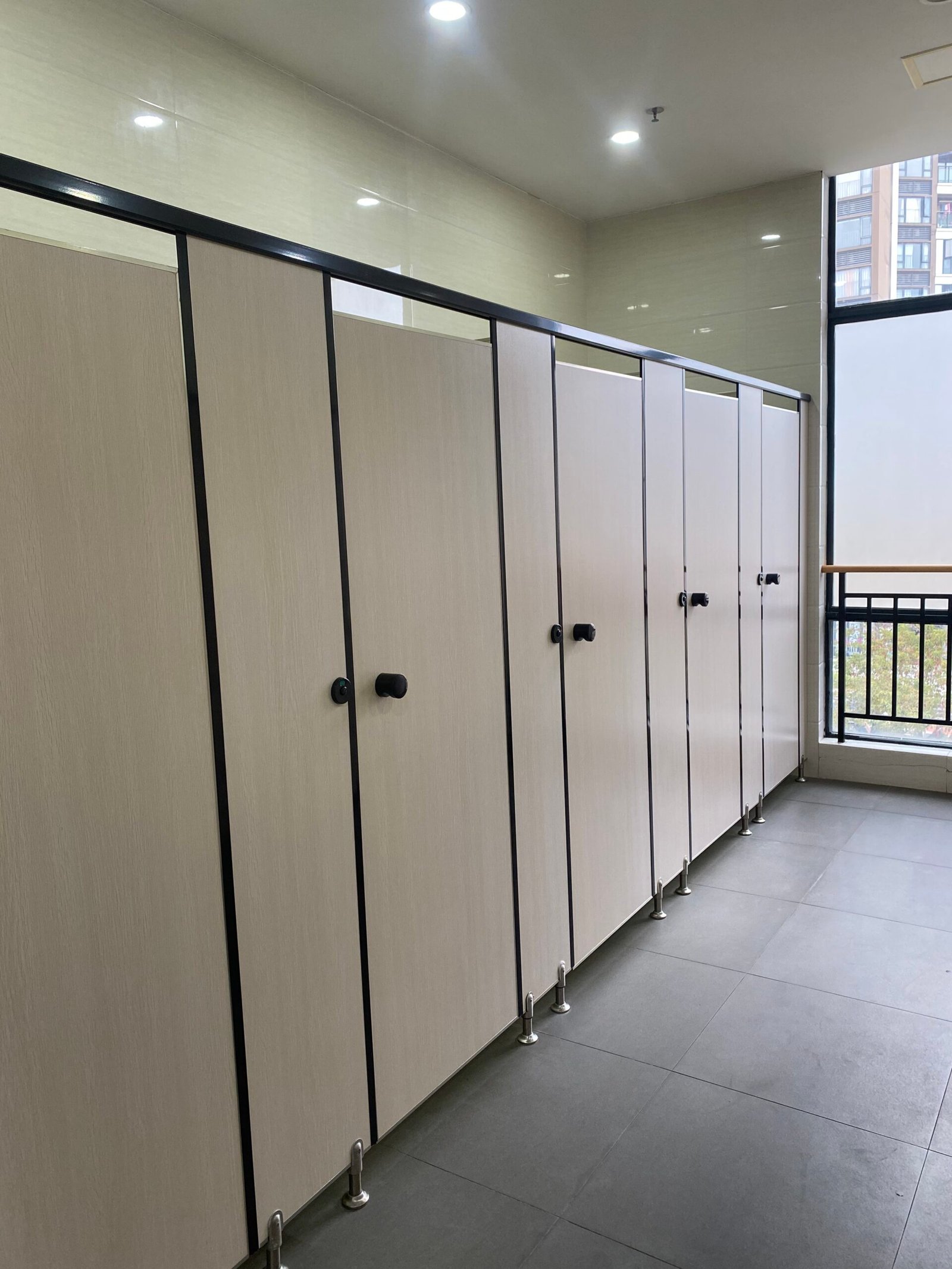
Restrooms in subway and train stations are likely among the most frequently used public restrooms.
With daily passenger traffic ranging from tens of thousands to even hundreds of thousands, the partition doors are opened and closed hundreds of times every day. So the question arises: What materials should be chosen for restroom partitions in high-traffic transportation hubs?
HPL (High-Pressure Laminate) panels are one excellent option.
II. Why HPL Is One of the Best Choices for High-Traffic Areas
Many people wonder: HPL is a bit pricey, so why are airports, subway stations, and high-speed rail stations all using it?
That’s because the logic behind material selection for these types of venues isn’t “the lowest initial purchase cost,” but rather “the lowest total cost of ownership.” HPL is precisely the option that offers the best value in this regard.
III. Practical Recommendations for Purchasers
If you are selecting materials for restroom projects at subway or train stations, keep the following points in mind:
1.
Recommended thicknesses are 12 mm or 18 mm. 12 mm is the standard choice for train station construction projects, while 18 mm offers greater impact resistance.
Hardware is equally critical. No matter how high-quality the panels are, they’re useless if the hinges and locks are subpar. We recommend using 304 or 316 stainless steel hardware.
Summary
When selecting materials for restroom partitions in subway and train stations, one should not focus solely on the initial purchase price, but rather on how many years the material will “hold up” under frequent use and harsh conditions.
Thanks to its five core properties—impact resistance, moisture and water resistance, chemical resistance, Class B1 fire rating, and ease of cleaning—HPL (High pressure laminate) panels have become the de facto standard for transportation hubs such as airports, high-speed rail stations, and subway stations.
If you need to purchase public restroom partitions soon, please contact us. We have a professional team and designers ready to create a custom solution for you.
