Address
Liguang Industrial Zone,Liguang Community, Guanlan Street, LonghuaDistrict, Shenzhen, Guangdong, China
Work Hours
Monday to Saturday: 8AM - 6PM ( Beijing Time: GMT+8 )
Sunday : Closed

Address
Liguang Industrial Zone,Liguang Community, Guanlan Street, LonghuaDistrict, Shenzhen, Guangdong, China
Work Hours
Monday to Saturday: 8AM - 6PM ( Beijing Time: GMT+8 )
Sunday : Closed

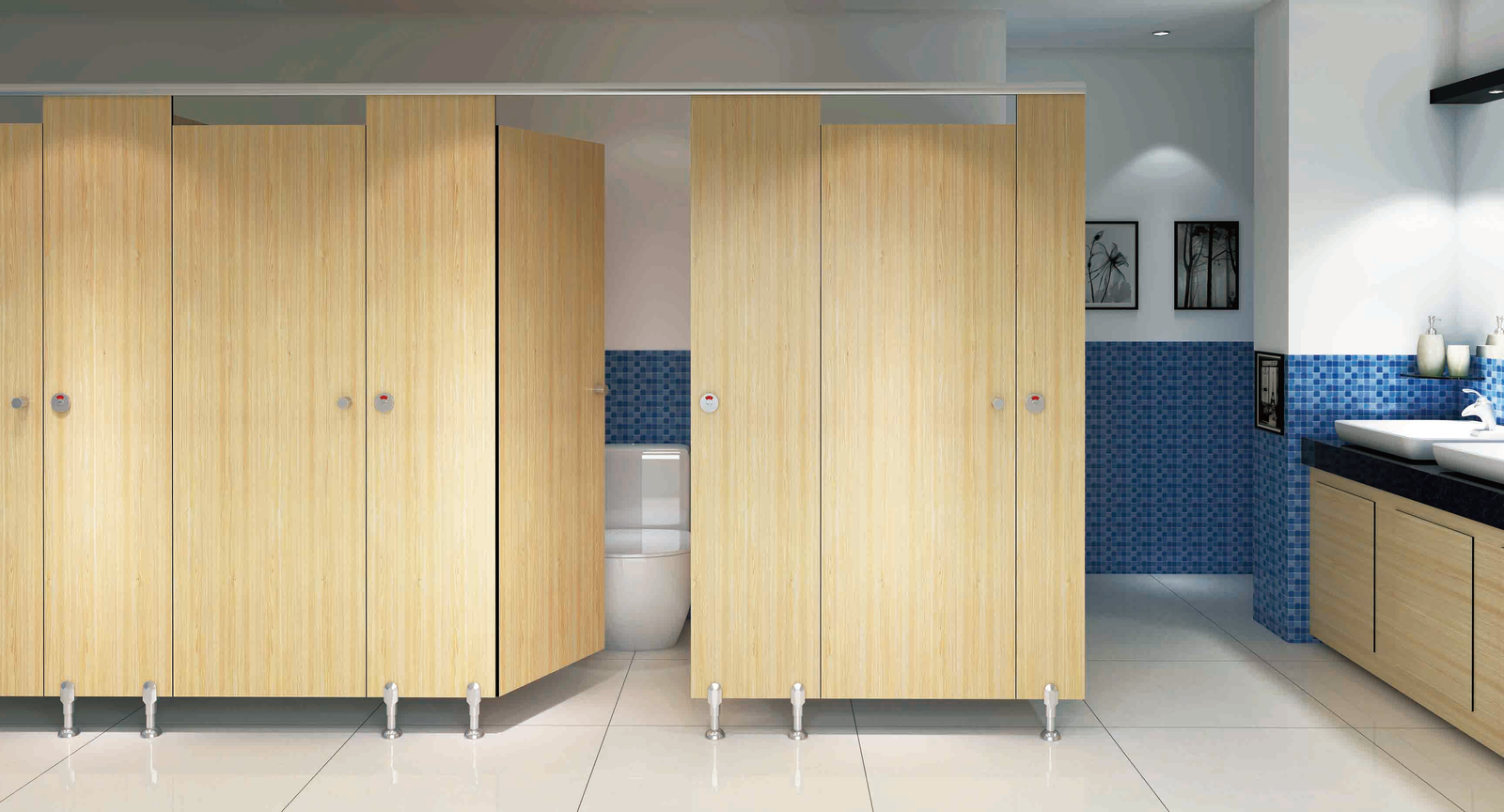
As a manufacturer with years of specialised experience in the high pressure laminate sector, we have witnessed this material’s global rise. In the Canadian market, with its stringent demands for quality, durability and environmental credentials, Antibacterial Board has become the undisputed mainstay for sanitary partitions in public spaces such as schools, hospitals, commercial centres and office buildings, owing to its unparalleled comprehensive advantages. Today, let us explore the reasons behind this phenomenon.
What is high pressure laminate?
First, a brief introduction to our flagship product – high pressure laminate Board. It is a robust sheet material formed by impregnating decorative paper and kraft paper with melamine resin and phenolic resin, followed by high-temperature, high-pressure curing. This process endows it with exceptional density, hardness, and outstanding physical and chemical properties, making it the ideal material for high-traffic public toilet partitions.
The core advantages of HPL toilet cubicle perfectly align with Canadian market demands.
Exceptional durability, withstanding high-traffic challenges: high pressure laminate Board boasts a highly hardened surface resistant to impact and scratching. Whether subjected to schoolbag abrasions, wheelchair collisions, or routine cleaning friction, its surface remains virtually untouched. This significantly extends partition lifespan while reducing maintenance costs.
Superior moisture resistance and antibacterial properties: Bathroom environments are humid, fostering bacterial and mould growth. HPL Bathroom cubicle dense composition absorbs virtually no water, resists deformation, and prevents bacterial penetration. Combined with seamless edging, it effectively blocks moisture ingress, providing users with a more hygienic and healthy environment.
Exceptional chemical resistance: Public washrooms require frequent disinfection with potent cleaning agents. Antibacterial panels demonstrate outstanding resistance to common acids, alkalis, and detergents, resisting discolouration, corrosion, or blistering to maintain a consistently pristine appearance.
Analysis of HPL Toilet partition Practical Applications Across Canadian Sectors
In Canadian primary, secondary and tertiary institutions, washroom facilities endure exceptionally high usage rates and frequent challenges.
Application Scenarios: Public washrooms within teaching blocks, sports halls and student accommodation.
2. Hospitals and Medical Centres — Rigorous Requirements for Hygiene and Sterilit
Within shopping centres and high-traffic retail venues, restroom facilities serve as a key indicator of the establishment’s quality and management standards.
Application Scenarios: Public restrooms in shopping centres, airports, railway stations, and restaurants.
Contemporary office buildings prioritise efficiency, professionalism and sustainability.
Application scenarios: Grade A office buildings, government institutions, corporate headquarters public restrooms.
In a market like Canada, which prioritises practicality, quality and long-term value, the dominance of Antibacterial Board in public washroom partitions is no accident. It perfectly addresses the complex and demanding requirements for durability, hygiene, safety and aesthetics in all types of public spaces.
As a specialist manufacturer of HPL Toilet cubicle, we remain steadfast in our commitment to delivering products that meet and exceed Canadian market standards. We firmly believe that high pressure laminate toilet cubicle represents not merely a choice of material, but an ethos of responsibility towards the enduring value of public spaces, alongside the health and safety of their users.
